


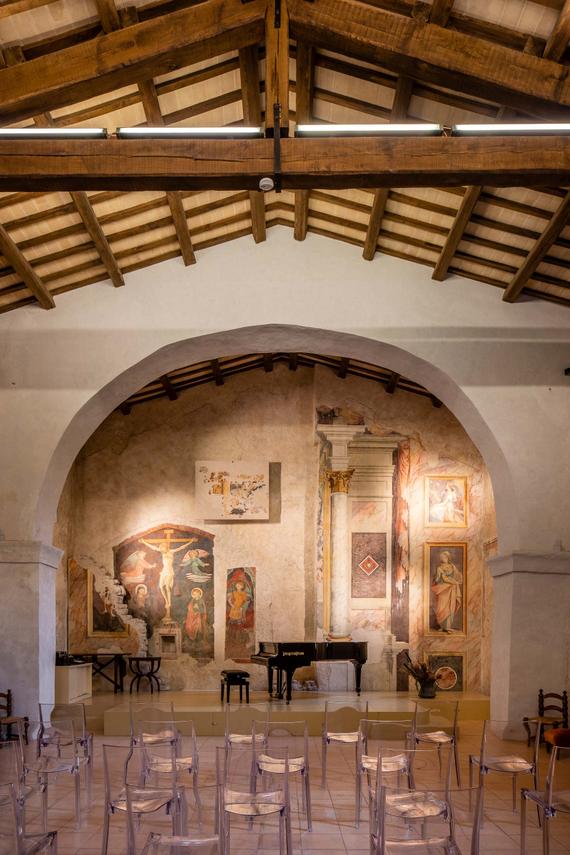
The church is probably one of the earliest buildings in the village, dating back to the 11th century and later enlarged between the 15th and 16th centuries. A magnificent 15th-century Crucifixion and a 16th-century fresco from the De Magistris (known as Il Caldarola) workshop, stand out in the background. In 1997, the earthquake caused the back wall to collapse, revealing another fresco behind it depicting the Crucifixion with the Sorrows and another with St Michael Archangel. Declared a monument of national interest by the Ministry of Culture, the church was restored and consolidated in an earthquake-proof manner, as was the entire village.
From place of worship to place of culture: today the church is a hall used for presentations, events and concerts, all freely accessible to guests and visitors to the village.
Read more
Reduce